




Post Date : 12 November 2025
Introduction – Why OpenStack Matters in Modern IT Infrastructure
In today’s evolving digital landscape, organizations require flexible, scalable, and self-managed cloud solutions. Managing compute, storage, and network resources efficiently across multiple systems is crucial for operational agility and cost control.
OpenStack provides a powerful platform to build and manage private or public cloud infrastructure. It enables organizations to control computing (compute), storage, and networking resources within a single integrated environment—similar to public cloud providers like AWS, Azure, or Google Cloud—but fully managed in-house at the company’s data center.
Technical Deep Dive – Understanding the Core Components of OpenStack
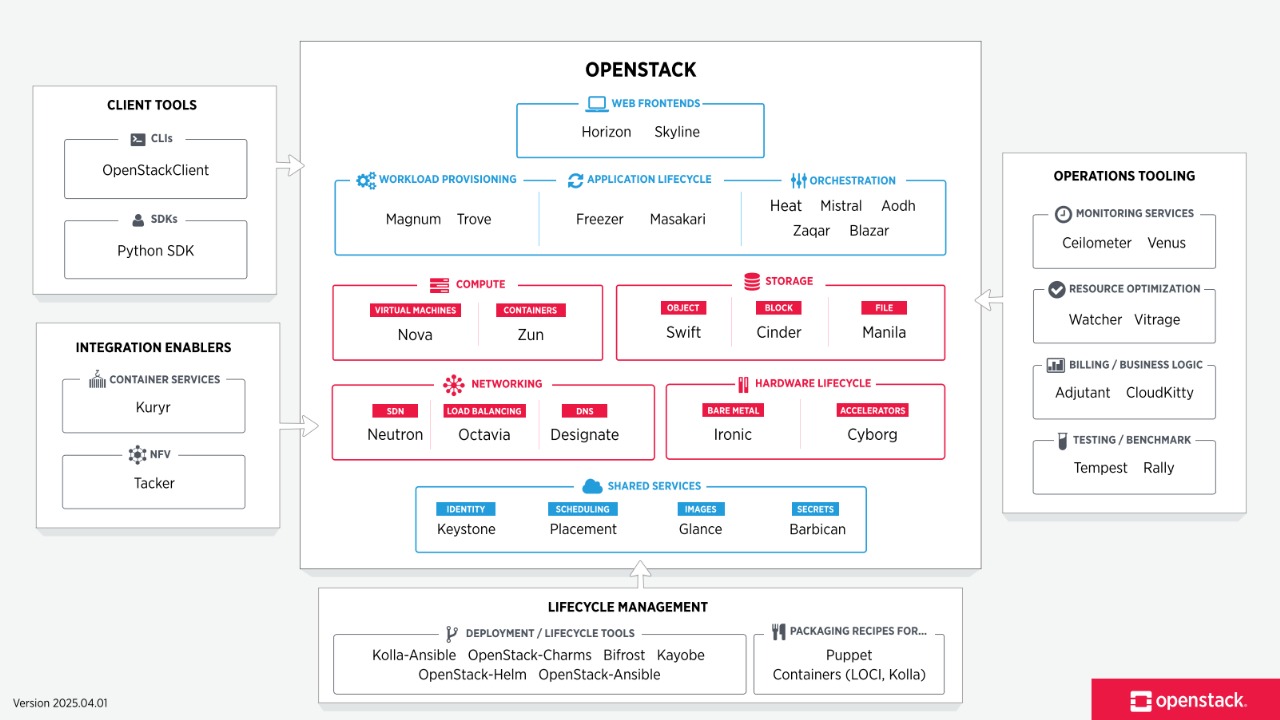
OpenStack is modular, allowing organizations to deploy only the components they need. The main technical components include:
Nova – Compute Management
– Manages virtual machines and computing resources.
– Supports scalable deployment of workloads across the cloud environment.
Neutron – Networking
– Provides network services such as VLANs, routing, and load balancing.
– Enables secure and flexible network configuration for cloud resources.
Cinder – Block Storage
– Handles block storage (virtual hard disks).
– Allows persistent storage for virtual machines.
Swift – Object Storage
– Stores large amounts of unstructured data, similar to Amazon S3.
– Provides high availability and redundancy for files and backups.
Keystone – Identity Service
– Manages user authentication and authorization.
– Ensures secure access control across OpenStack services.
Glance – Image Management
– Maintains VM templates and system images.
– Facilitates rapid provisioning of new virtual machines.
Horizon – Web Dashboard
– Provides a browser-based interface for cloud management.
– Simplifies monitoring, configuration, and administration.
Step-by-Step – How to Implement OpenStack
Assess Business Needs
Identify objectives such as building a private cloud, enabling IaaS, or supporting DevOps workflows.
Choose Components
Decide which OpenStack modules are required based on organizational needs.
Prepare Infrastructure
Ensure hardware, network, and storage resources are ready to support OpenStack deployment.
Install OpenStack Services
Deploy selected modules (Nova, Neutron, Cinder, etc.) on your servers.
Configure Networking and Storage
Set up VLANs, IP addressing, load balancers, and storage backends according to best practices.
Create User and Project Accounts
Use Keystone to define user roles, permissions, and project-specific resource quotas.
Access via Horizon Dashboard
Monitor, manage, and provision cloud resources through the web-based interface.
Best Practices & Tips
Start small and scale OpenStack modules as needed.
Use modular deployment to optimize resources and reduce complexity.
Monitor cloud performance continuously to ensure high availability.
Regularly update OpenStack components to maintain security and stability.
Integrate with automation tools (Ansible, Terraform) for DevOps workflows.
Apply role-based access control (RBAC) for secure multi-tenant environments.
Troubleshooting – Common Issues and Solutions
VM Deployment Fails
➤ Cause: Misconfigured Nova or image issues.
➤ Solution: Check logs, ensure images are available in Glance, and verify compute node health.
Networking Problems
➤ Cause: Incorrect Neutron configuration or IP conflicts.
➤ Solution: Review network topology, verify VLANs, and test routing rules.
Storage Access Issues
➤ Cause: Block storage (Cinder) or object storage (Swift) misconfiguration.
➤ Solution: Confirm storage backends, check volume attachments, and validate Swift replication.
Authentication Errors
➤ Cause: Keystone misconfiguration or expired tokens.
➤ Solution: Verify user credentials, service endpoints, and token expiration policies.
Glossary – Key Terms
- OpenStack: Open-source cloud platform for managing compute, storage, and networking resources.
- Nova: Component for managing virtual machines.
- Neutron: Network service for routing, VLANs, and load balancing.
- Cinder: Block storage service for persistent volumes.
- Swift: Object storage service for large-scale file storage.
- Keystone: Identity and access management service.
- Glance: Image service for VM templates.
- Horizon: Web-based dashboard for OpenStack management.
- IaaS: Infrastructure as a Service, providing virtualized computing resources on-demand.
Related Blog Posts
☁️ Building Your First Private Cloud with OpenStack
🔧 Optimizing OpenStack Networking for Enterprise Deployments
🚀 Automating Cloud Workflows with OpenStack and DevOps Tools
💡 OpenStack vs Public Cloud: When to Choose Self-Managed Infrastructure
Arrange Your Schedule – Book Your Appointment Online Now